Instructor: |
Professor F. L. H. Wolfs
Department of Physics and Astronomy, B&L 203A
Telephone: (585) 275 - 4937
Email: wolfs@pas.rochester.edu
URL: http://teacher.pas.rochester.edu/ |
Teaching Assistants: |
Recitations:
Labs:
|
Course Description: |
First semester of a three-course honors sequence, recommended for prospective departmental concentrators and other science or engineering students with interest in physics and mathematics. Topics studied are similar to those in PHY 121, but are covered in greater depth. These include symmetries, vectors, coordinate and velocity transformations, motion in one and two dimensions, Newton's Laws, work and energy, conservation of energy and momentum, special relativity, systems of particles, gravity and Kepler's laws, rotations, oscillations, molecular theory and thermodynamics. In addition to Two 75-minute lectures each week, One recitation each week and One three-hour laboratory every other week is required. The laboratory and recitation registration is at the same time as the course registration. |
Pre-Requisites: |
Completion of high school / AP physics and calculus. Successful completion of MATH 161 or MATH 171 with a C- or better is required. (MATH 161 or MATH 171 can be taken concurrently.) |
Credit Hours: |
4 credits. This course includes 150 minutes per week of lecture time (two lectures at 75 minutes each), one workshop per week (120 minutes), five laboratory sessions during the semester (160 minutes each), and and 380 minutes per week of out-of-class student work (e.g., reading assignments, problem sets, study time, and other unsupervised work). |
Course Objectives: |
In this course you will be introduced to rrelativistic and non-relativistic mechanics and thermodynamics, visualize and explain mechanical processes, and develop problem solving skills and strategies. Our goal is to ensure you (1) understand how to apply the laws of motion to study different mechanical system, (2) understand basic thermodynamical systems (gasses, heat engines, entropy), and (3) be able to explain the properties of these mechanical systems using the tools presented in the course. |
Course Homepage: |
http://teacher.pas.rochester.edu/Phy141/Phy141HomePage.shtml |
Learning Outcomes: |
By the end of this course, you will be able to:
- Describe 1D, 2D, 3D, and rotational motion.
- Determine if you need to use relativistic mechanics or non-relativistic mechanics.
- Know how to apply Newton's laws.
- Predict the properties of mechanical system.
- Understand the gravitational force and how it governs the motion of galaxies, stars, and planets.
- Understand the various conservatiion laws and under which conditions they are valid.
- Be familiar with energy and angular momentum quantization.
- Understand simple-harmonic, damped, and driven harmonic motion.
- Be able to describe the properties of ideal gasses.
- Understand the laws of thermodynamics.
|
Text: |
Ruth W. Chabay, Bruce A. Sherwood, Aaron P. Titus, Stephen J. Spicklemire, Matter & Interactions,
Volume 1, Modern Mechanics, Fifth Edition (required).
P. Bevington
and D. Robinson, Data Reduction and Error Analysis (strongly recommended).
|
Lectures: |
Tuesdays and Thursdays: 9.40
am - 10.55 am (Hoyt). |
Recitations: |
Tuesdays: 3.25 pm - 4.40 pm (B&L 269): Samantha McLean
Wednesdays: 2.00
pm - 3.15 pm (B&L 269): Lyu Kai Liao
Wednesdays: 6.15
pm - 7.30 pm (Hylan 202): Justin Kenneally
Recitations will start on Tuesday September 8, 2026. |
Laboratories: |
During
the semester you will complete 5 laboratory experiments (roughly one
experiment every two weeks). The schedule of these experiments
is as follows:
Experiment
1: September 14 ,2026
Experiment
2: September 28, 2026
Experiment
3: October 19, 2026
Experiment 4: November 2, 2026
Experiment
5: November 16,2026 (data taking in the May Room) and November 30, 2026 (analysis)
Each
experiment will take 2 hours and 40 minutes to complete. Currently,
three laboratory sections are offered: Mondays between 2 pm and 4.40
pm, 4.50 pm - 7.30 pm, and 7.40 pm and 10.20 pm. All laboratories, except Part 1
of Experiment # 5 on November 11, 2024 which will be conductor in Spurrier Gym, will be conducted in B&L 407.
Office hours will be held during the lab time periods, usually during the week following the experiment. See the Phy 141 Calendar for details.
Lab reports are due on the Wednesday at noon in the week following the experiment. The due date is changed to the Friday at noon if there is midterm exam during that week. The lab reports must be submitted in pdf format using the phy141 laboratory drop box (links are provided on the web pages describing the experiments). Use the following format for the name of the lab report you are submitting: Exp#-LastName-FirstName-StudentID.pdf where # is the experiments number (1, 2, 3, 4, or 5), LastName is your last name, FirstName is your first name, and StudentID is you student ID number.
Each student needs to write and submit their own lab report in their own words.
Lab report due dates:
- Lab # 1: Wednesday September 23, 2026
- Lab # 2: Wednesday October 7, 2026
- Lab # 3: Wednesday October 28, 2026
- Lab # 4: Wednesday November 11, 2026
- Lab # 5: Wednesday December 9, 2026
NOTES:
- You must complete ALL labs and ALL lab reports in order to get a grade for this course.
- Late submissions are not accepted. If your lab report is late, you will receive a 0 for that report.
|
Office Hours: |
Office hours start during the week of September 7, 2026.
Frank Wolfs:
Thursdays between 11.30 am and 1.30 pm and by appointment, B&L 203A.
Teaching Assistants: (all office hours are in the POA in B&L)
- Ken Liao: Wednesday 12 - 2 pm.
- Samantha McLean: Thursdays 3.30 - 5.30 pm.
- Justin Kenneally: Thursdays 8 - 10 pm.
|
Homework: |
Homework
will be assigned each Friday. The homework is due the following
Friday at noon. A fraction of the homework assignments are
distributed and completed electronically, using WebWork, while the
problems for which a written solution is required must be submitted as pdf file to Box.
Each homework set
will consist of a number of quantitative problems that are based
on the material discussed the previous week. The problem
sets will reinforce the course material and it is critical for your
survival in this course to complete the assignments and understand
any mistakes you may have made while working on these problems.
Extra credit can be
earned by completing various programming problems using the VPython
programming language. The extra credit problems will be part
of the regular homework assignments.
The homework assignments are due at noon on the following dates:
- Homework Set # 1: Friday September 11.
- Homework Set # 2: Friday September 18.
- Homework Set # 3: Friday September 25.
- Homework Set # 4: Friday October 9.
- Homework Set # 5: Friday October 16.
- Homework Set # 6: Friday October 23.
- Homework Set # 7: Friday Novtember 6.
- Homework Set # 8: Friday Novtember 13.
- Homework Set # 9: Friday Novtember 20.
- Homework Set # 10: Friday December 4.
- Homework Set # 11: Friday December 11.
NOTES:
- Late submissions are not accepted. If your homework is handed in late, you will receive a 0 for that assignment.
- You have 25 tries to get the answer to each WeBWorK question correct. Once you exceed this number of attempts, your answers will no longer be recorded.
|
Final Grade: |
The
final grade will be the weighted average of:
- Final
exam (20 - 25%)
- Mid-term exams (15 - 20% each)
- Homework
(15%)
- Lab
(15%)
- Quizzes
(5%)
|
Midterm exams: |
Tuesday September 29, 2026, 8.00 am - 9.20 am (Hoyt).
Thursday October 29, 2026, 8.00 am - 9.20am (Hoyt).
Tuesday November 24, 2026, 8.00 am - 9.20
am (Hoyt). |
Final exam: |
Monday, December 21, 4.00 pm - 7.00 pm (Hoyt) |
Exam policy: |
As part of each exam you will receive a
sheet of useful equations that cover the material that is covered on
the exam. You
will be able to view/download the equation sheet before the exam so that
you will be able to determine what information will be provided on the
exam. Do not spend your time memorizing formulas; it is more important
that you understand how to use them! |
Quizzes: |
Quizzes
will be given during lecture. Each quiz will contain 3 - 4 short questions, related to the
material being discussed. You will submit the ansers using the polleverywhere tool (using either a web browser or using text messages).
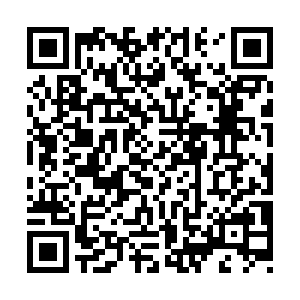
To particpate in the quizzes you use the following URL: PollEv.com/frankwolfs050 or you can scan the following QR code:
|
Academic Honesty |
All assignments and activities associated with this course must be performed in accordance with the University of Rochester's Academic Honesty Policy. Please review the Tips and Pittfalls webapges for excellent exampls of what to do to avoid possible violations of the Academic Honesty Policy. You are prohibited from looking at Chegg.com for any purpose while taking this course. Any suspected use of Chegg.com and similar sites on any homework assignment or exam, will be reported as a suspected violation of the academic honesty policy of the University of Rochester. The use of Artificial Intelligence to write the term paper is strictly forbidden. All papers will be checked for plagiarism and AI. Any suspected plagiarism and use of AI will be reported as a suspected violation of the academic honesty policy of the University of Rochester. |
|
All times listed on this syllabus are times in the Eastern timezone of the USA (Rochester time). |


